Innovative Applications of Tethered Drones in High-Altitude Cleaning
1. What is a Tethered Drone?
A tethered drone is an unmanned aerial vehicle connected to a ground-based power system via a cable. Unlike conventional battery-powered drones, tethered drones can achieve long-duration continuous flight while transmitting real-time data through the tether.
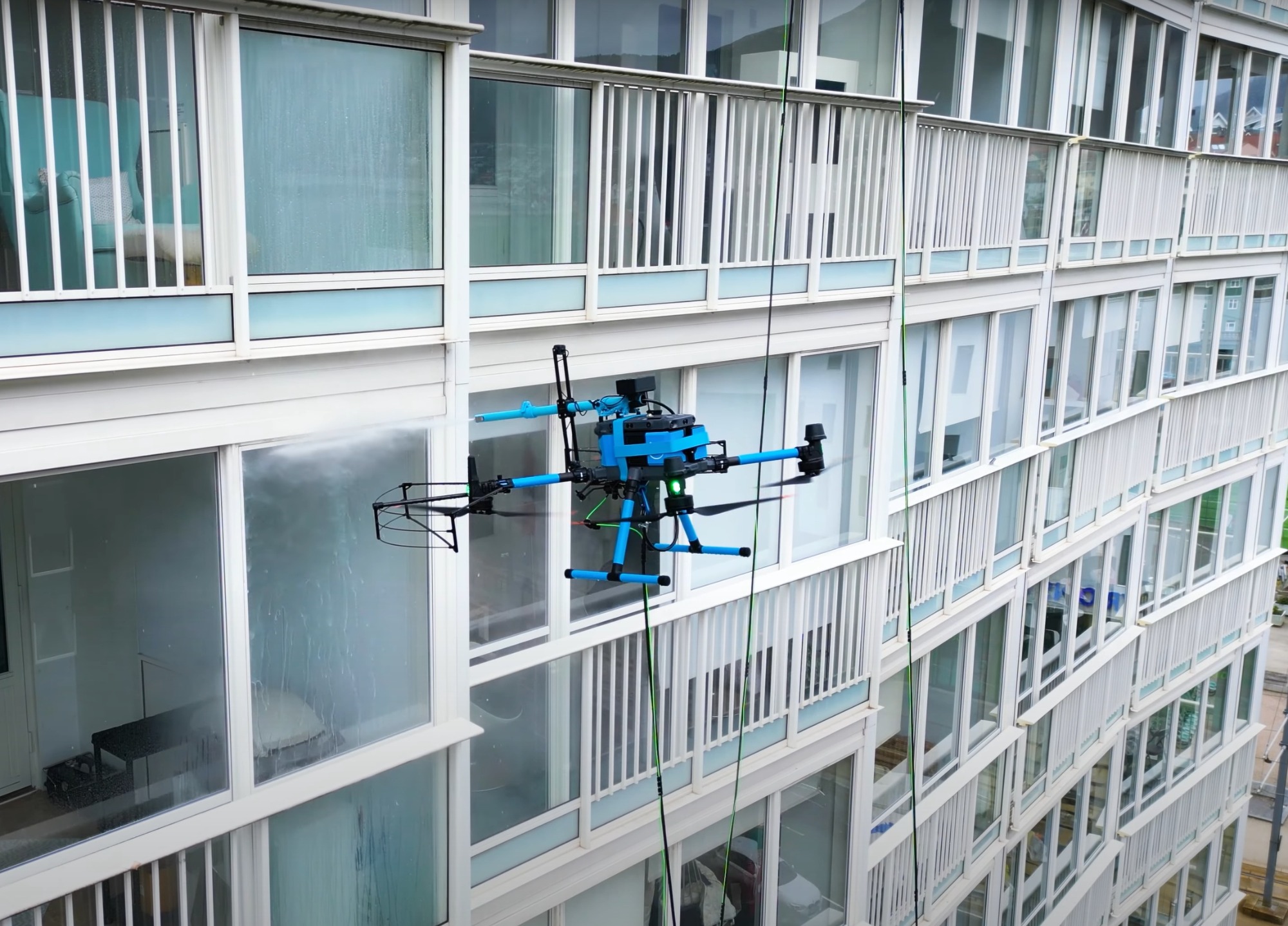
Key advantages include:
Continuous Power Supply—Extends flight duration from minutes to hours or even 24/7 operation.
Stable Data Transmission—The tether also serves as a communication link, ensuring uninterrupted image and control signal transfer.
Enhanced Safety —Physical tethering minimizes the risk of signal loss or uncontrolled descent.
These advantages make tethered drones particularly well-suited for demanding, safety-critical operations.
2. Why Tethered Drones are Ideal for High-Altitude Cleaning
High-altitude cleaning demands exceptional safety, stability, and operational efficiency. Typical applications include:
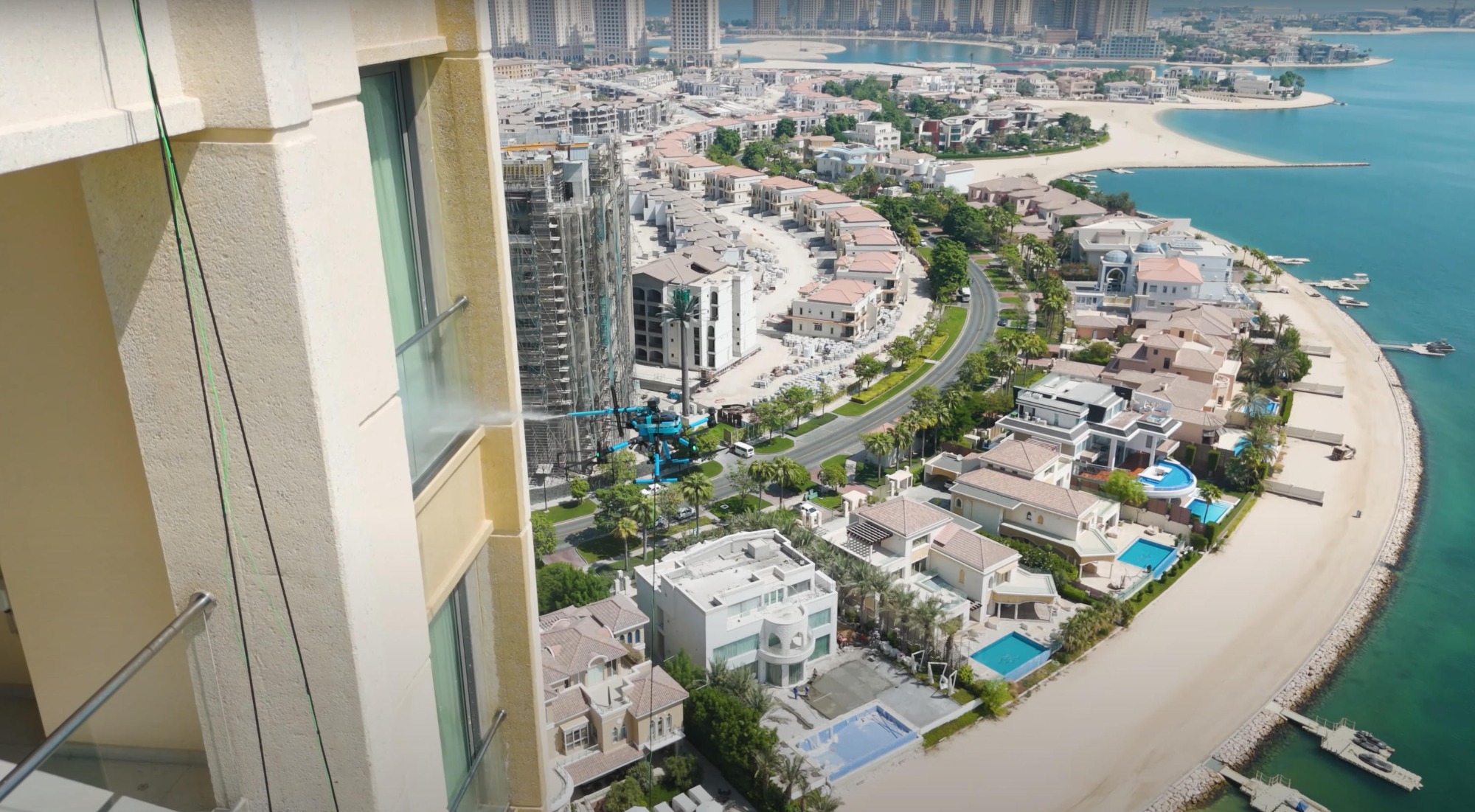
1). Cleaning glass façades of skyscrapers
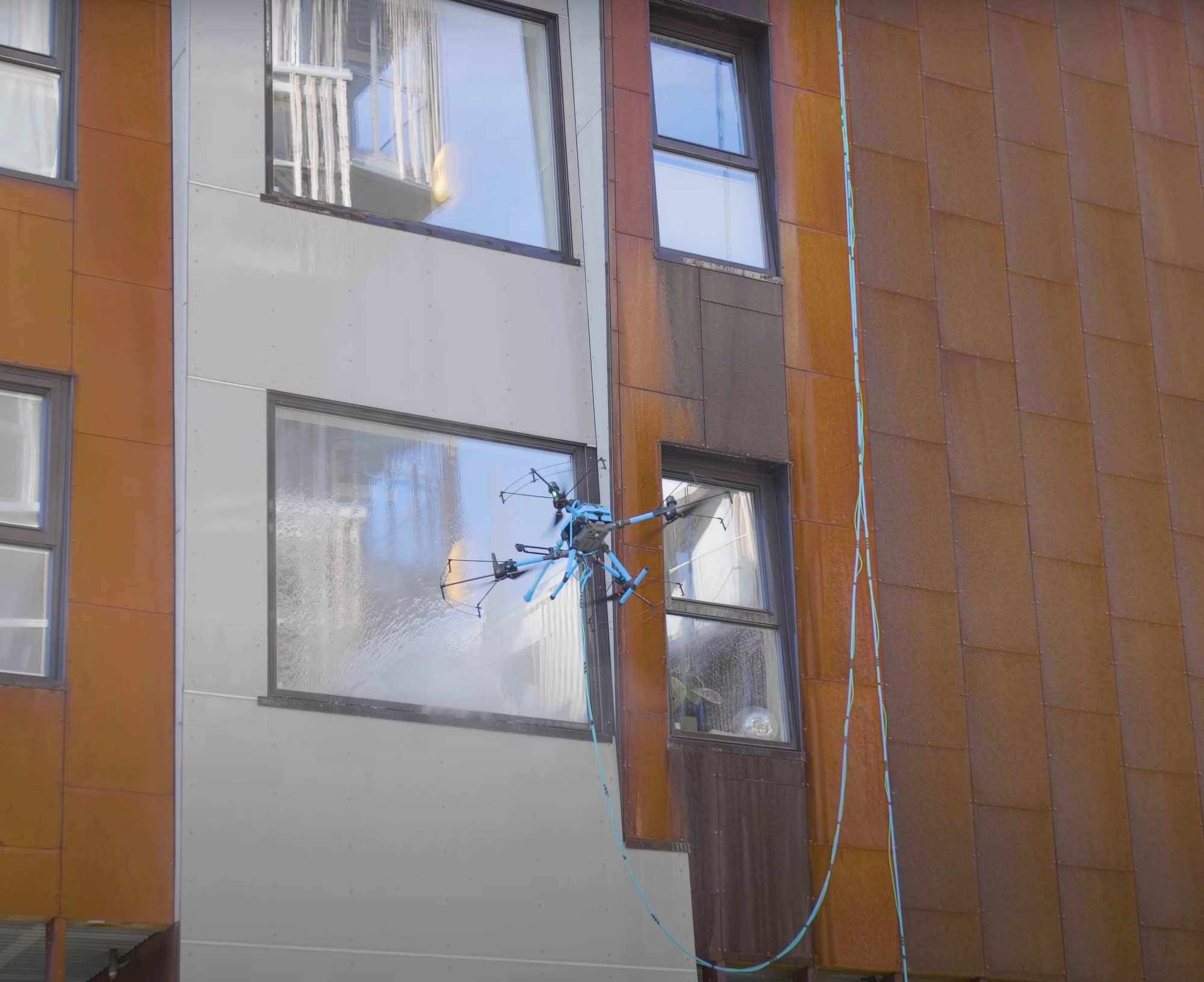
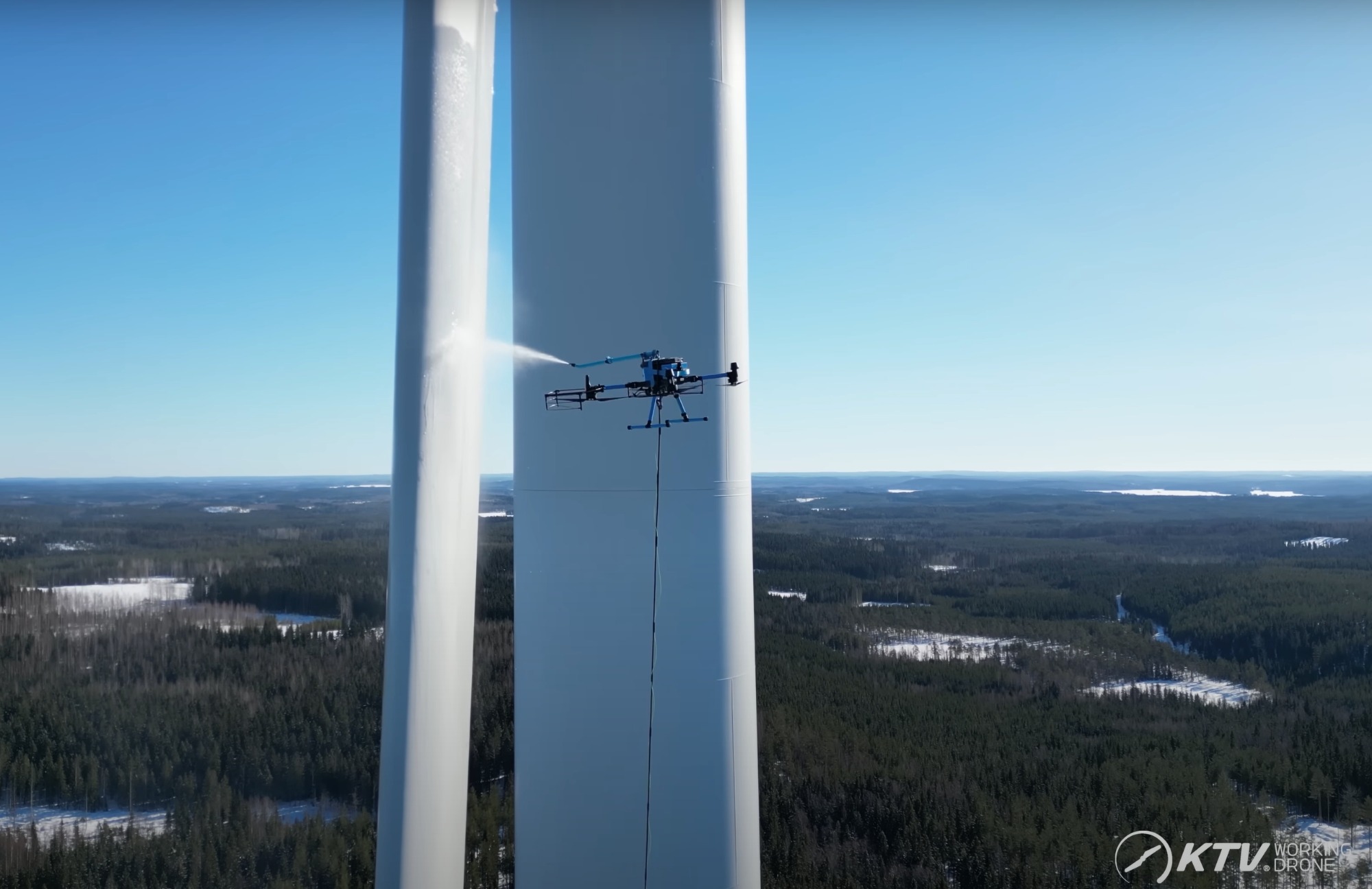
2). Washing wind turbine blades
3). Maintaining large storage tanks, bridges, and industrial facilities
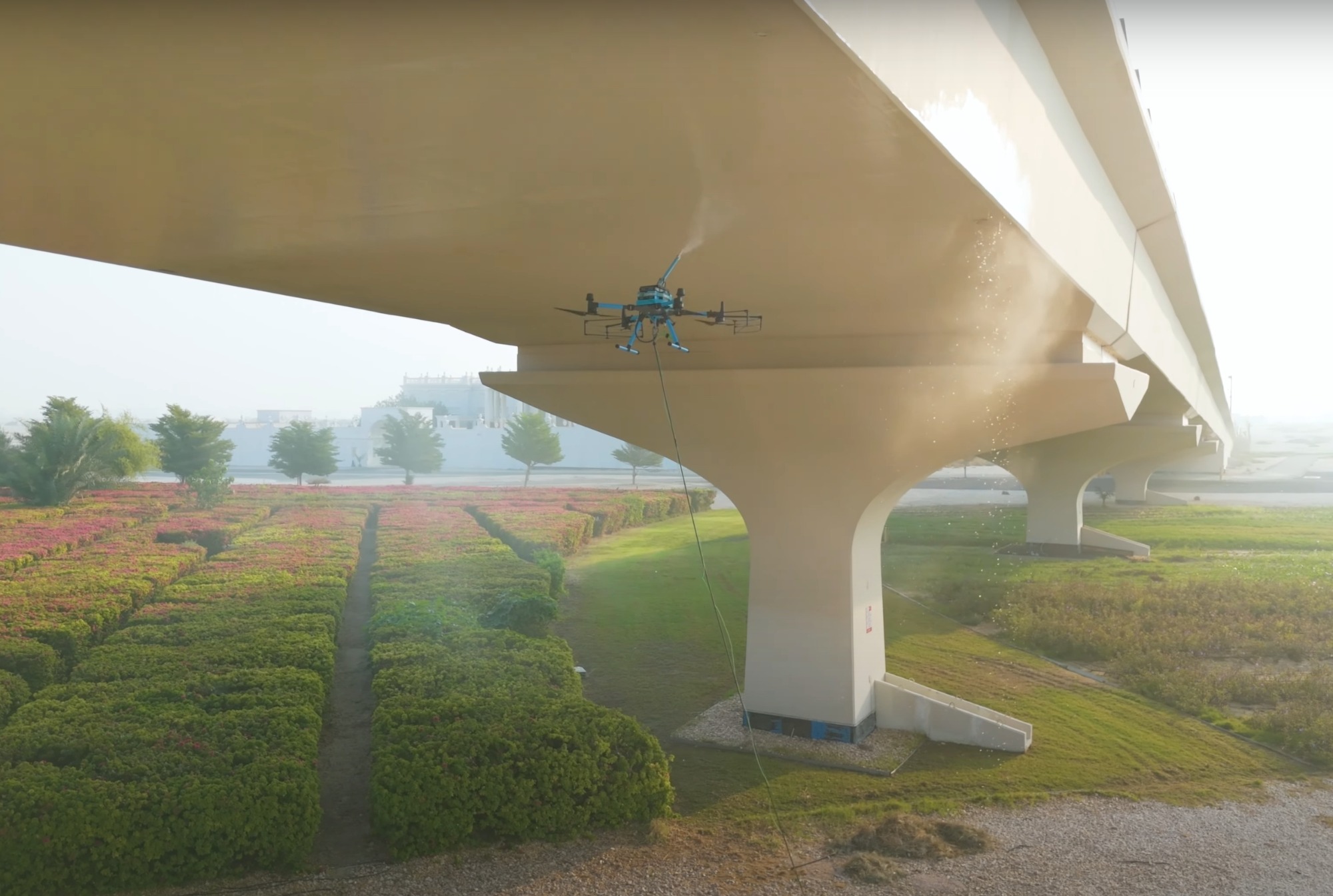
Traditional cleaning methods—such as suspended platforms, boom lifts, or rope access—carry high safety risks, require significant manpower, and are often limited by site conditions and weather.
3. Advantages of tethered drones for cleaning:
1). Improved Safety – Operators remain safely on the ground, eliminating direct exposure to high-altitude hazards.
2). Greater Flexibility – Access to narrow, complex, or hazardous areas that are inaccessible to traditional equipment.
3). Continuous Operation – Long-duration hovering enables faster completion of cleaning tasks.
4). Multi-Function Integration – Equipped with high-pressure sprayers, ultrasonic cleaning devices, or other tools for precise operations.
4. Key Application Scenarios
Cleaning drones are well-suited for a wide range of applications, offering efficient, safe, and cost-effective solutions for hard-to-reach areas. Some of the most common uses include:
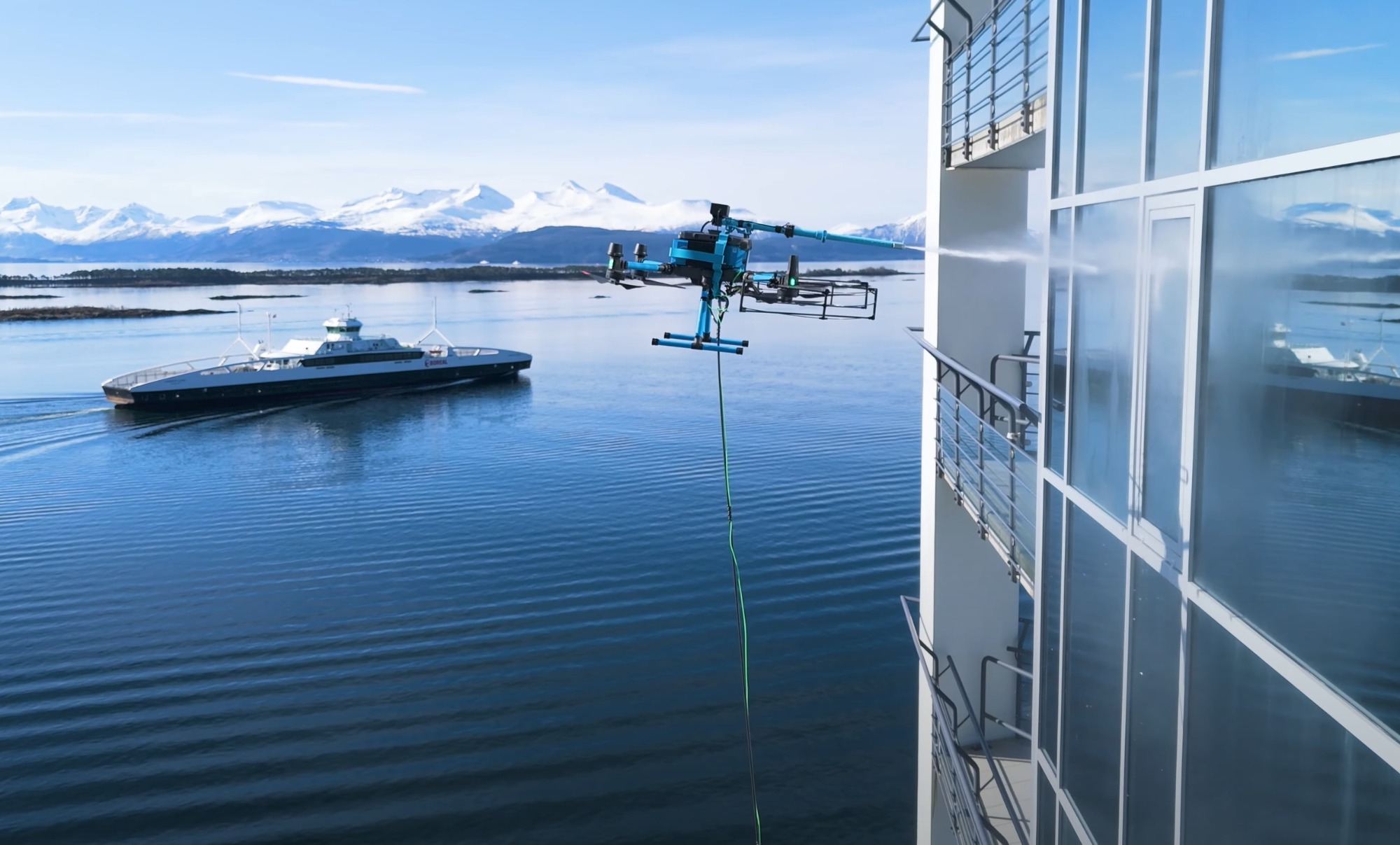
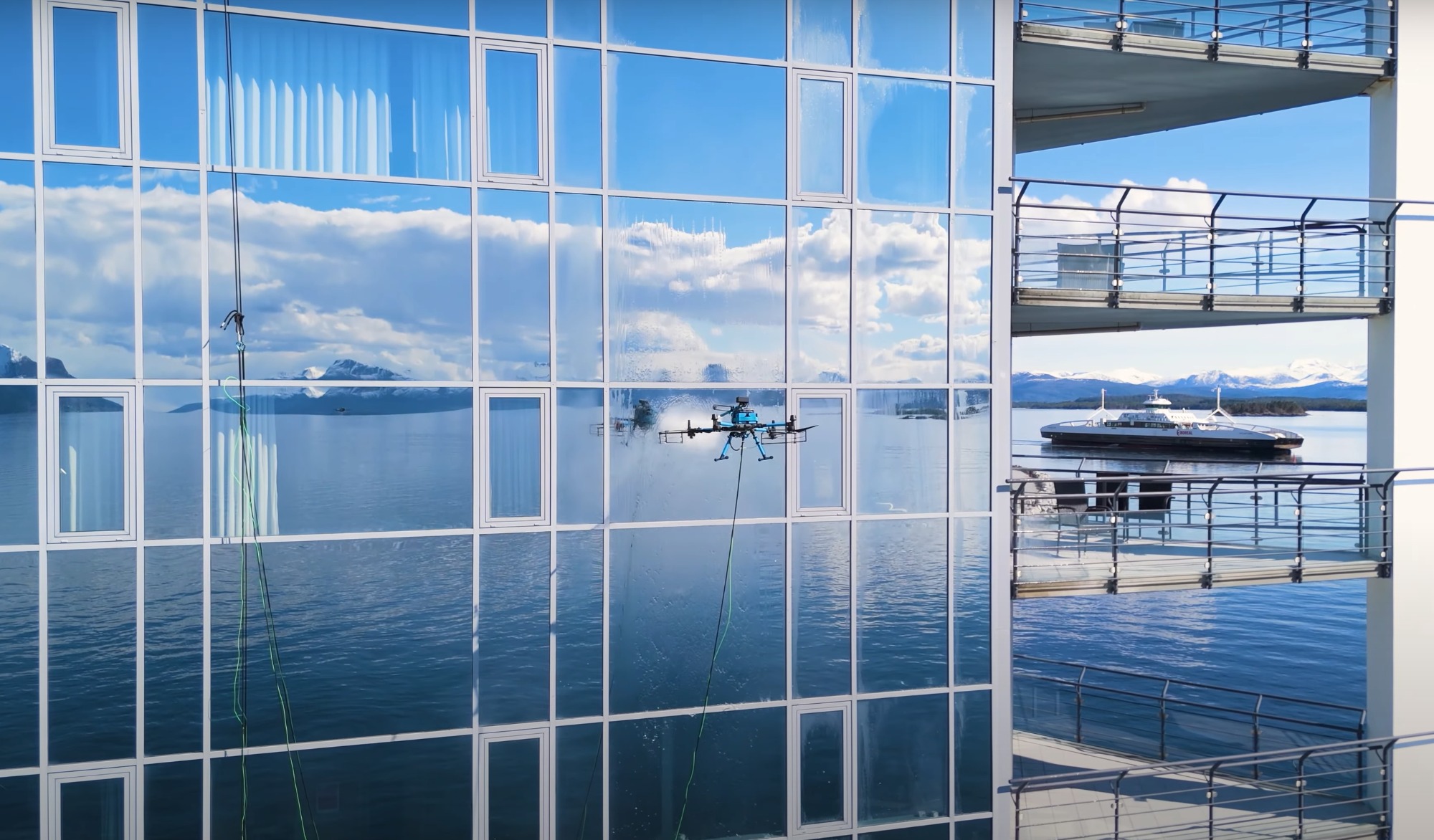
1). High-Rise Window Cleaning: Drones can effortlessly access windows on skyscrapers, tall buildings, and towers—eliminating the need for scaffolding, ropes, or manual labor at dangerous heights.
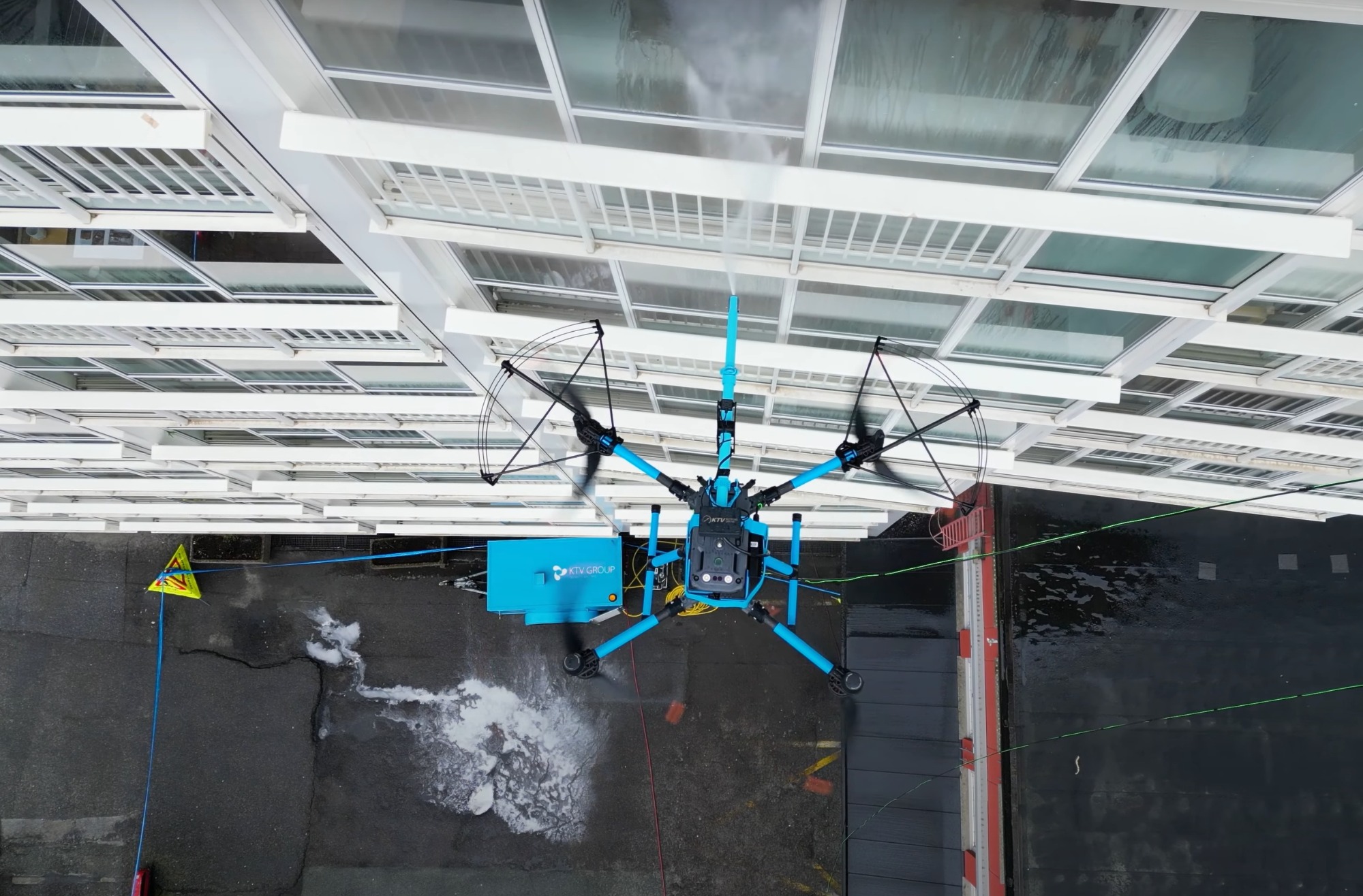
2). Building Facade Cleaning: They are capable of cleaning building exteriors, effectively removing accumulated dirt, grime, and environmental pollutants to maintain aesthetic appeal and structural integrity.
3). Solar Panel Cleaning: Drones can clean rooftop solar panels, ensuring optimal performance by removing dust, bird droppings, and debris that can significantly reduce energy efficiency.
4). Roof Inspection and Cleaning: Equipped for both inspection and cleaning tasks, drones can remove leaves, moss, and debris from roofs, helping to prevent long-term damage and extend the lifespan of roofing materials.
5. Future Development Trends
The next generation of tethered cleaning drones will integrate AI-based vision recognition, automated route planning, and real-time quality monitoring. Combined with compact fluid supply systems and advanced cleaning tools, these drones will evolve into intelligent aerial maintenance platforms—capable of identifying stains, optimizing workflows, and ensuring consistent cleaning quality. Such innovations align perfectly with the needs of smart cities and advanced industrial operations.
6. Conclusion
Tethered drones are revolutionizing high-altitude cleaning by replacing dangerous, labor-intensive methods with safer, more efficient, and smarter solutions. Whether used for skyscraper windows, wind turbines, or industrial facilities, tethered cleaning drones significantly reduce safety risks, cut manpower costs, and improve operational efficiency.
For city managers, industrial enterprises, and maintenance service providers, investing in tethered drone cleaning systems is not just an upgrade—it is a step toward intelligent, technology-driven maintenance that defines the future of modern infrastructure management.
 ROSEFINCH TECHNOLOGY Showcases Tethered Drone Power Station at Shenzhen UAV Expo 2026
 Welcome Our Valued Returning Pakistani Client to Rosefinch for Factory Visit and Further Cooperation
 Official Statement Strategic Upgrade
 Low-Altitude Economy and Unmanned Systems Global Expansion Forum Successfully Held